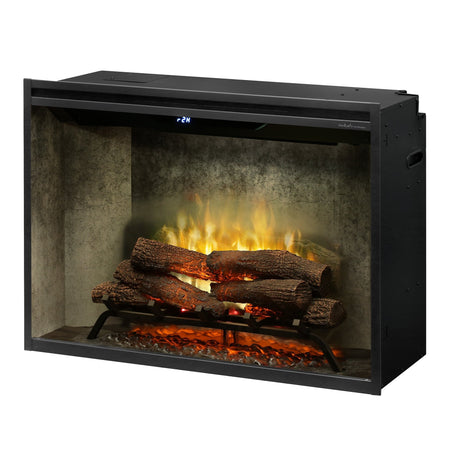
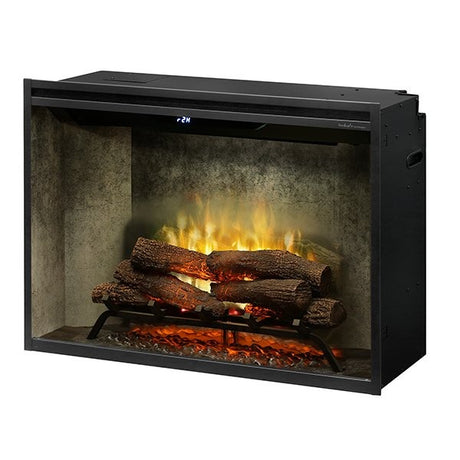
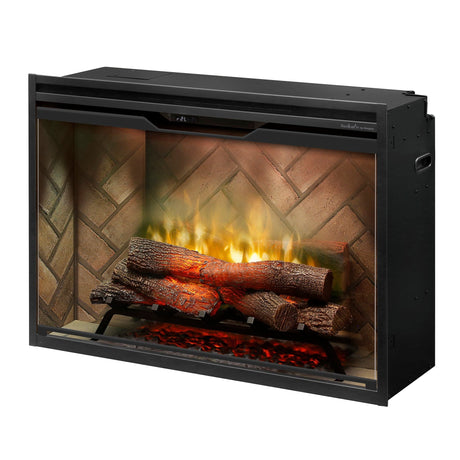
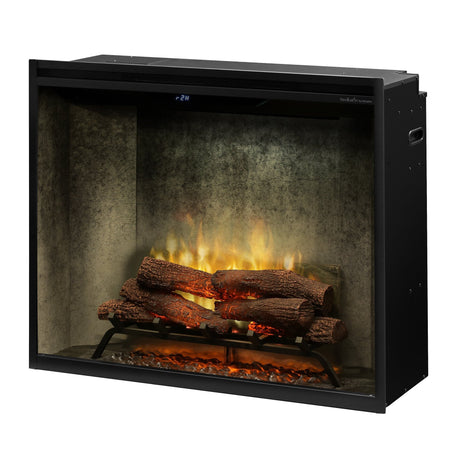
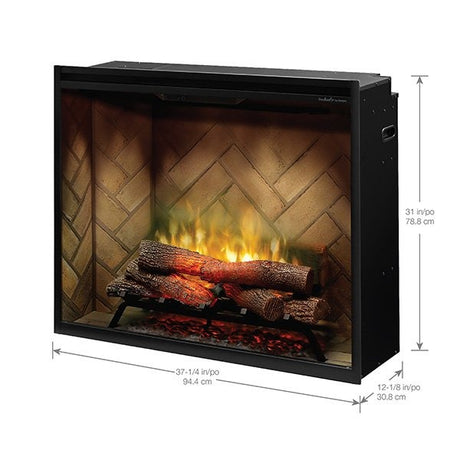
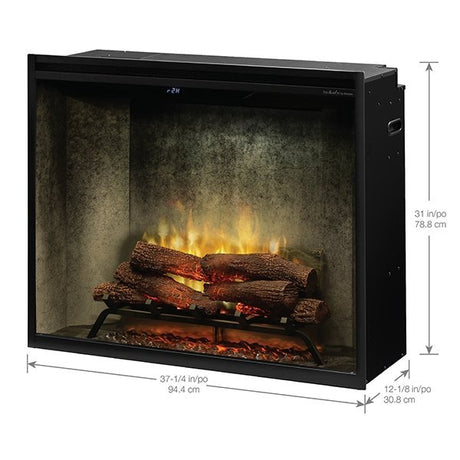
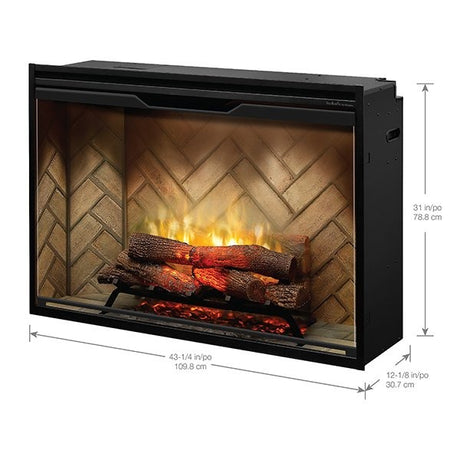
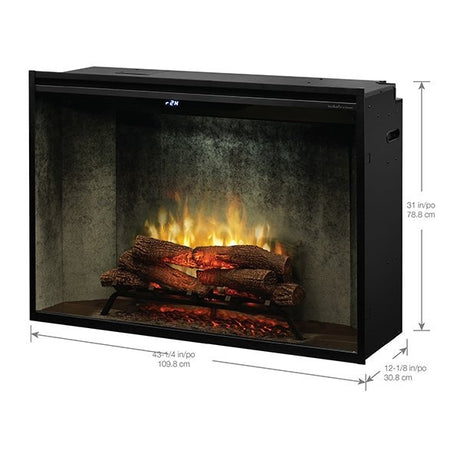
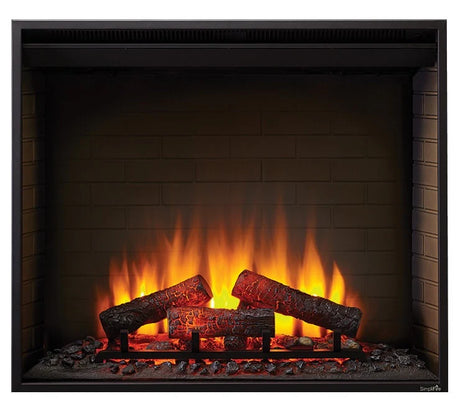
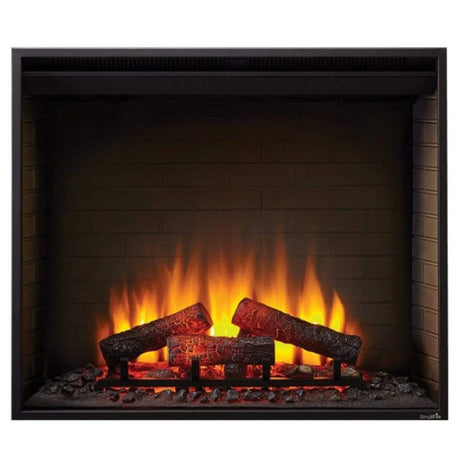
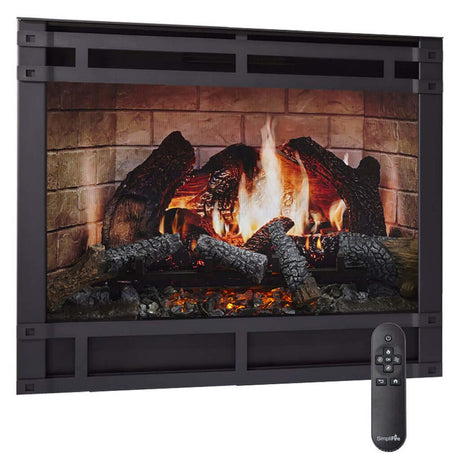
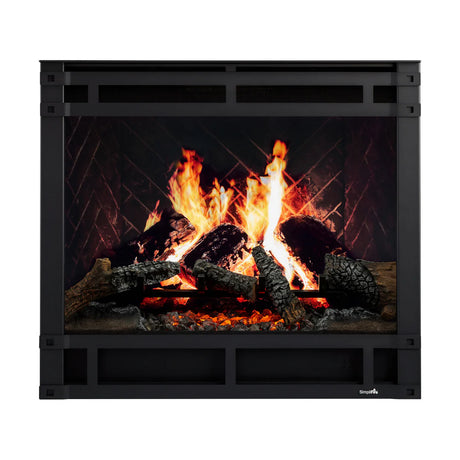
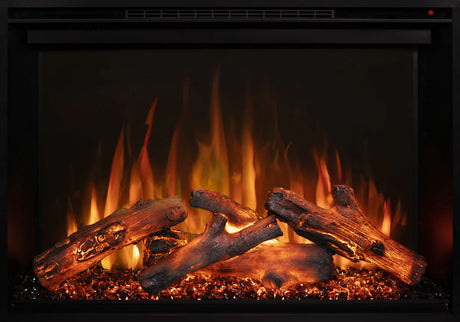
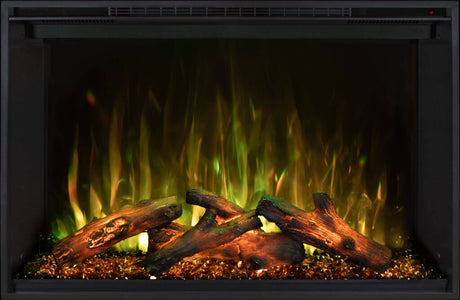
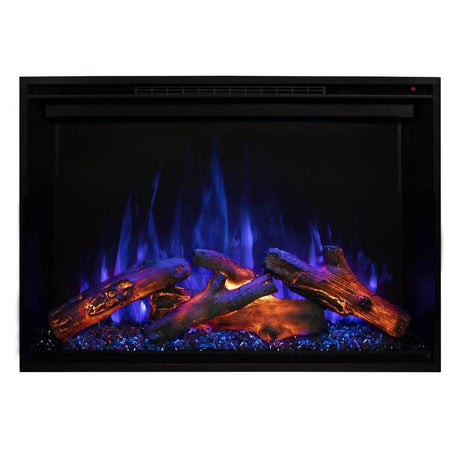
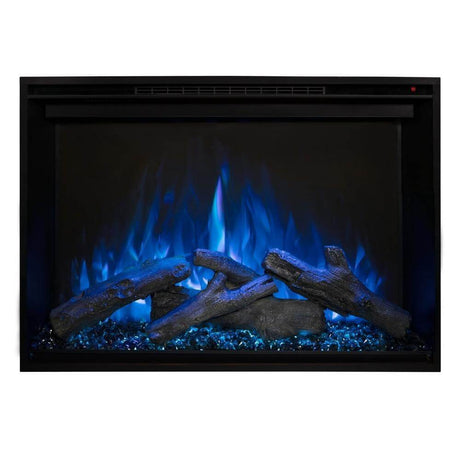
The Traditional Firebox Format: Log Set, Ember Bed, and Square Opening
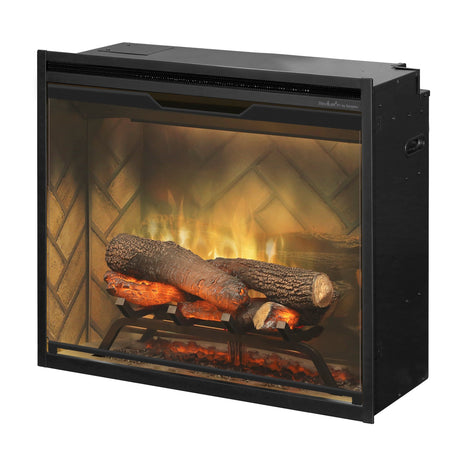
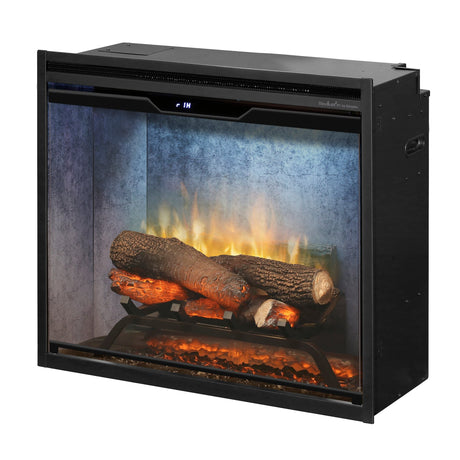
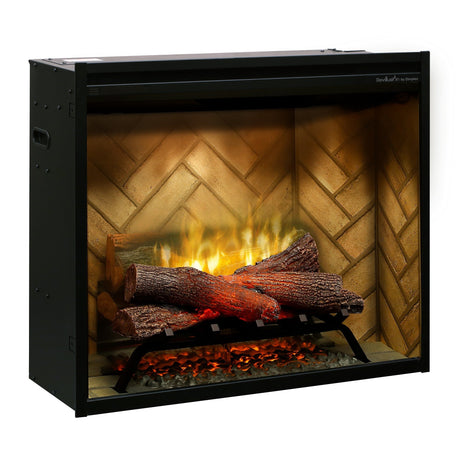
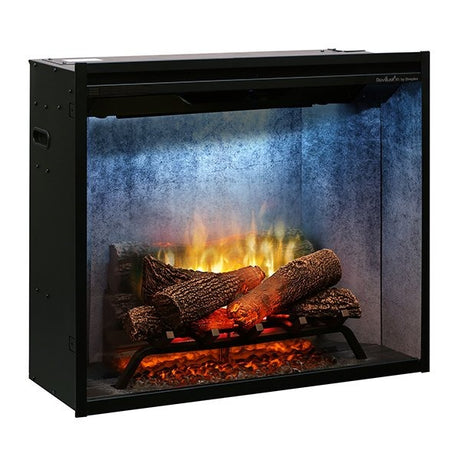
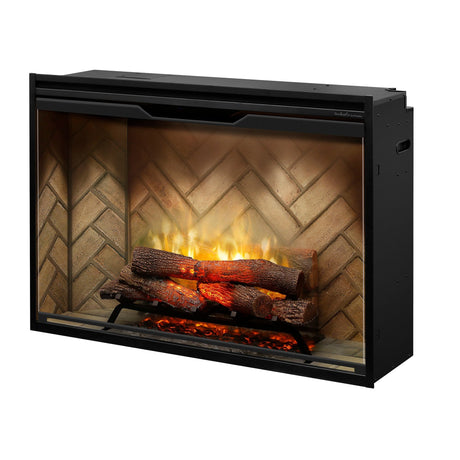
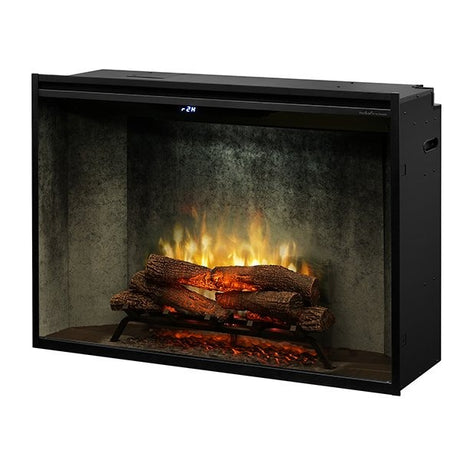
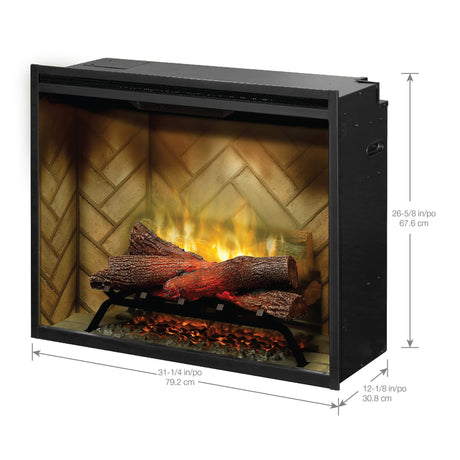
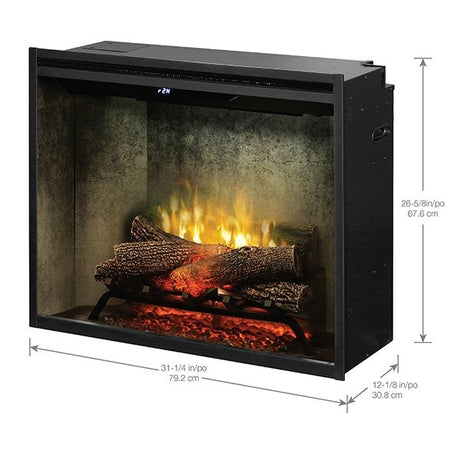
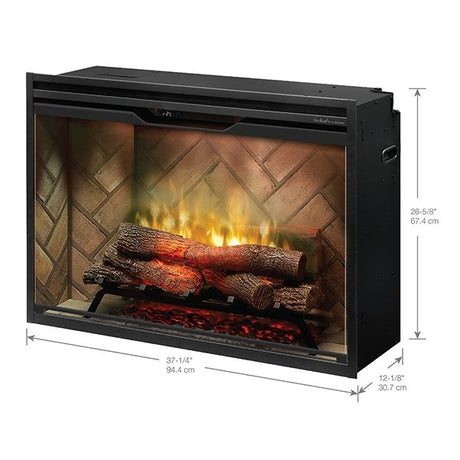
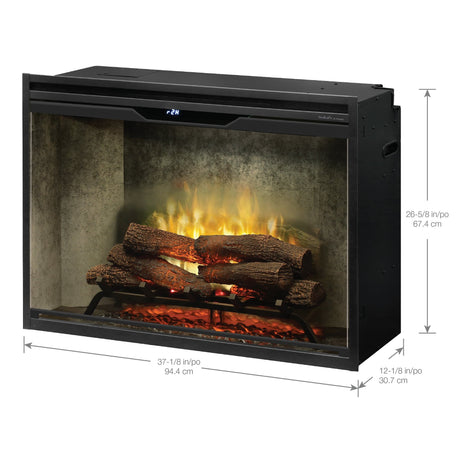
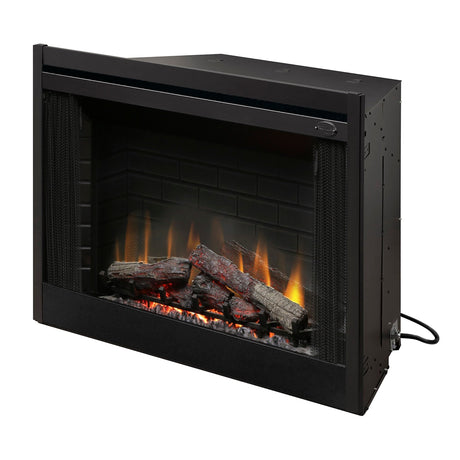
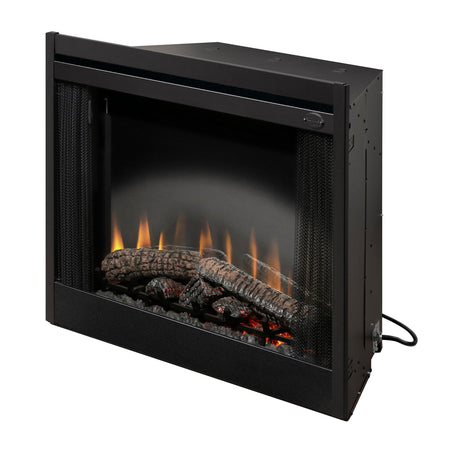
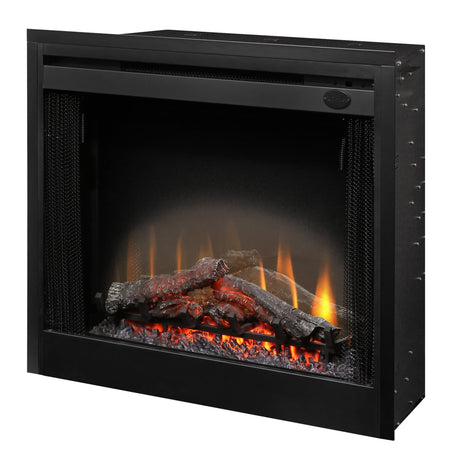
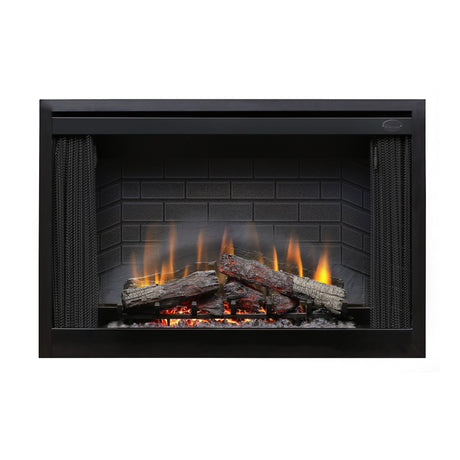
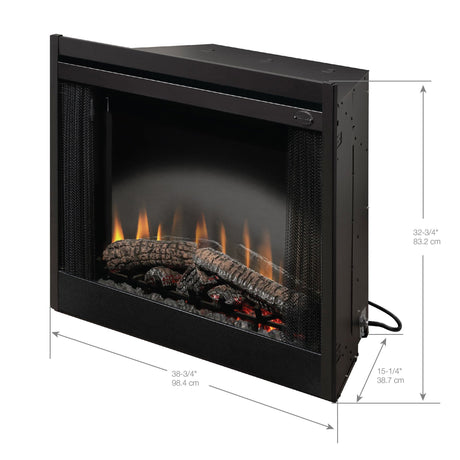
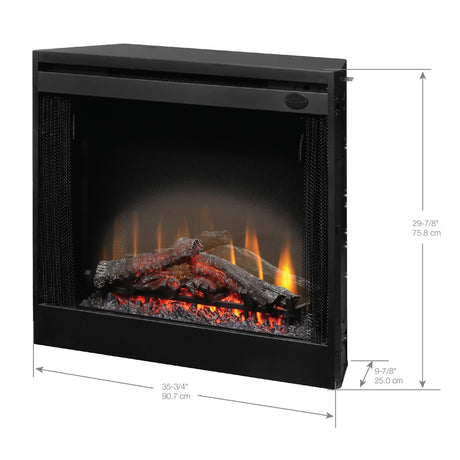
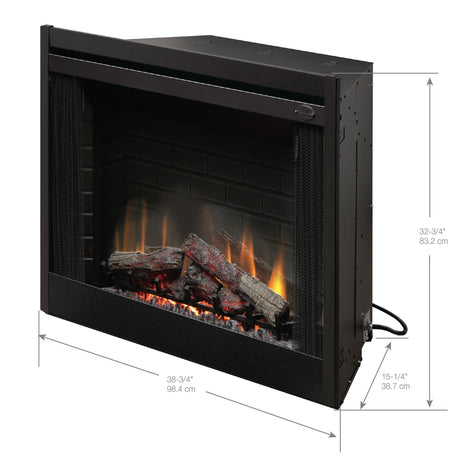
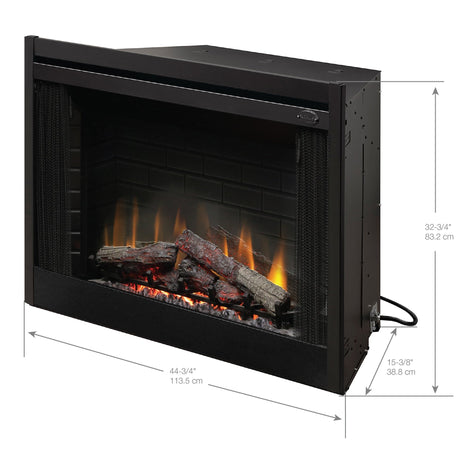
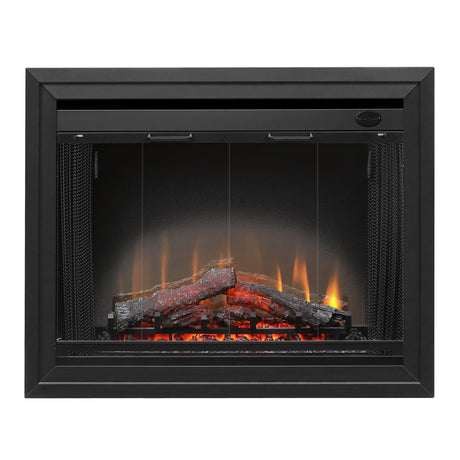
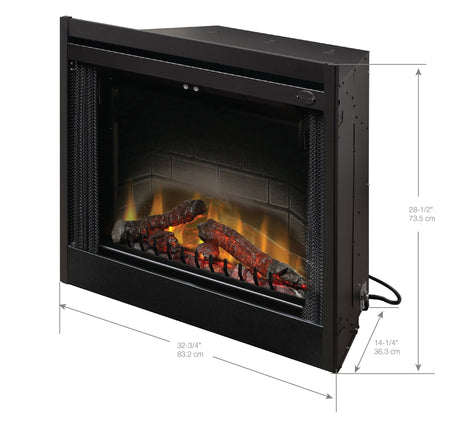
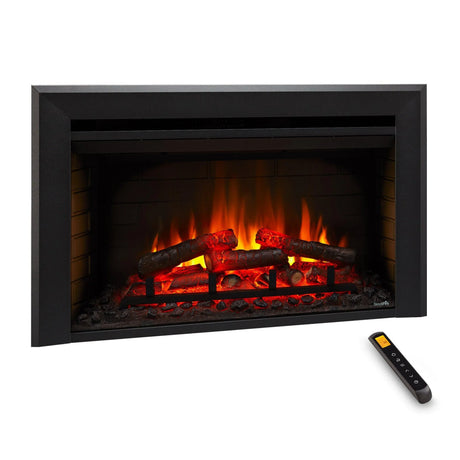
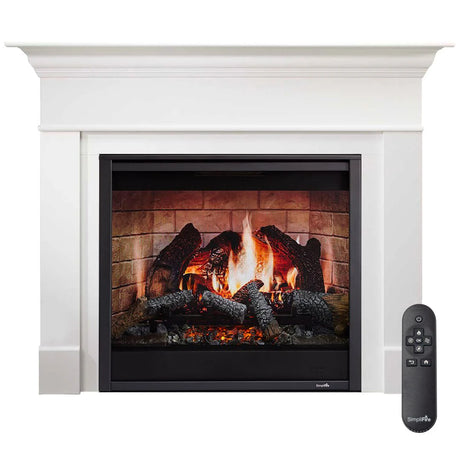
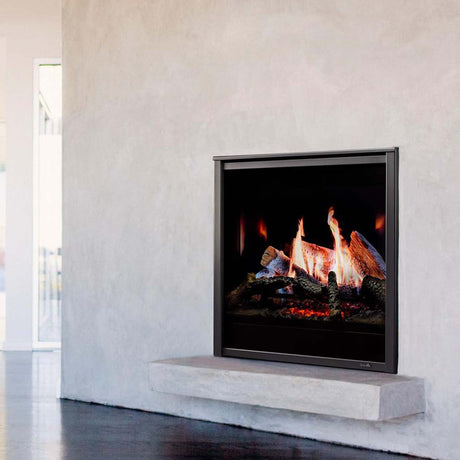
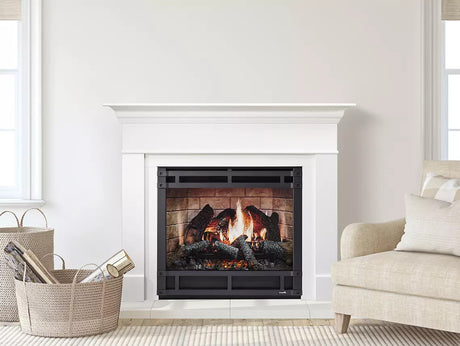
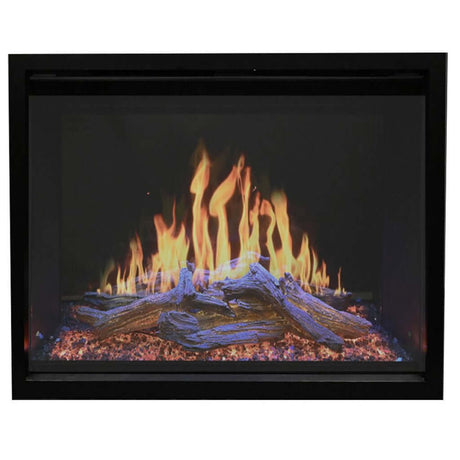
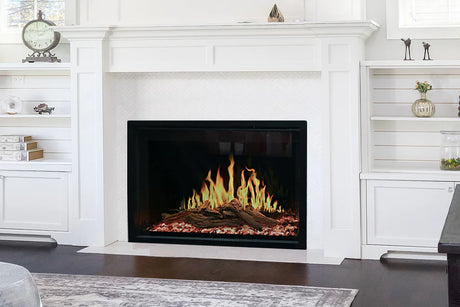
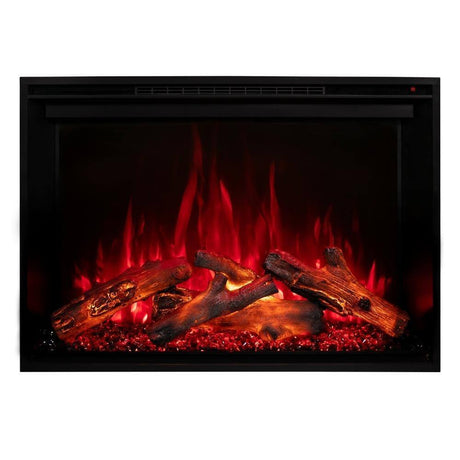
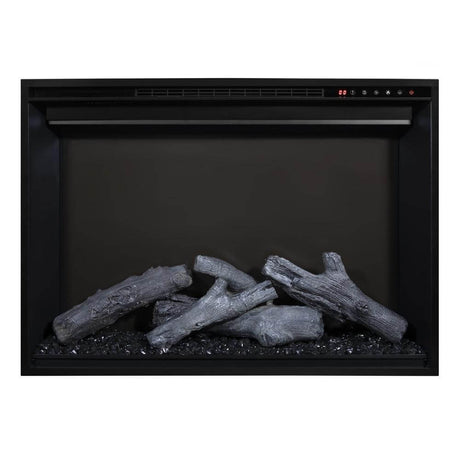
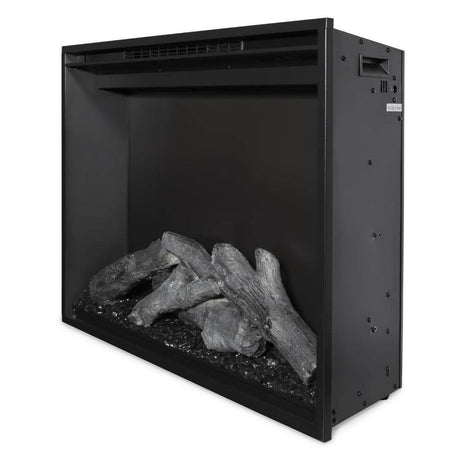
Traditional electric fireplaces are defined by their firebox proportions — a square or near-square viewing area with a traditional log set positioned against a glowing ember bed, built to read as a fireplace from across a room. This is the classic electric fireplace format: front-facing, vertically oriented, and sized to fit where a gas or wood fireplace would sit. Viewing widths across this collection run from 24" to 54", covering the full range of standard residential fireplace openings. Every model includes adjustable flame speed and color, and select units add ambient crackling sound. If you're looking for an antique electric fireplace aesthetic with a high-performance heating element, or a traditional style electric fireplace for new construction, these models cover both ends of that range.
Two Flame Technologies: HelioVision™ and Revillusion®
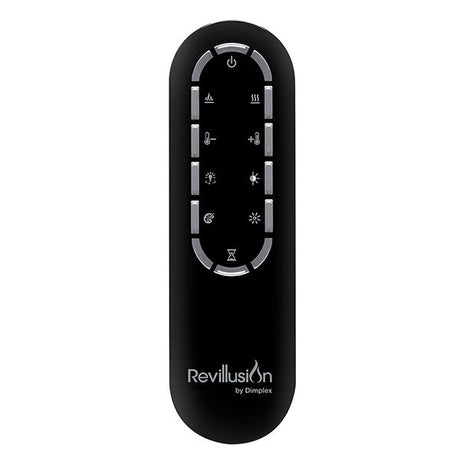
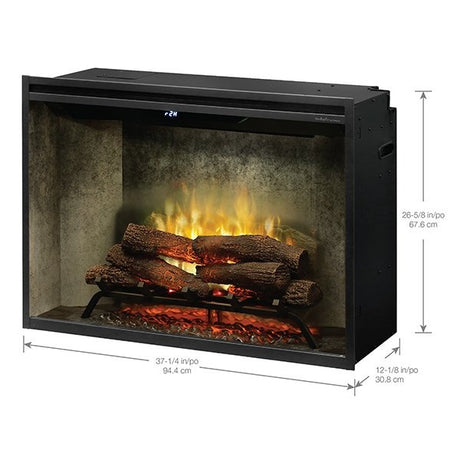
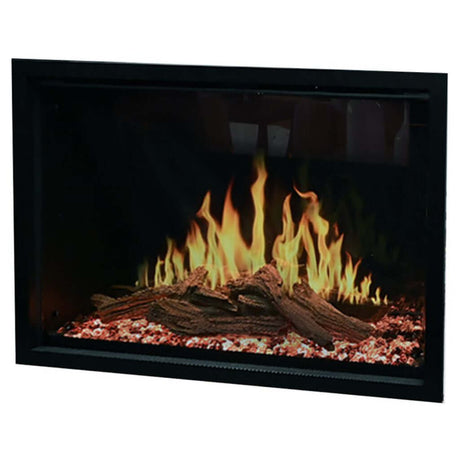
The Orion Traditional from Modern Flames uses HelioVision™ technology — a multi-layered LED system that produces a three-dimensional flame with 18 preset combinations of style and color, Wi-Fi control via the Modern Flames app, and an optional 240V upgrade for 8,300 BTU output on the 36", 42", and 54" sizes. The Dimplex Revillusion® takes a different approach: handcrafted Realogs® with internal LED illumination reflect against a frosted acrylic panel to create flame depth through projection — the result is a traditional log flame that holds up at close viewing distances. Both consistently appear at the top of traditional electric fireplace reviews when flame realism is the deciding factor. Each technology has a dedicated collection page for deeper comparison; the best traditional electric fireplace for your space will depend on whether you prioritise layered LED depth or reflective log realism.
Installation, Retrofit, and Mantel Compatibility
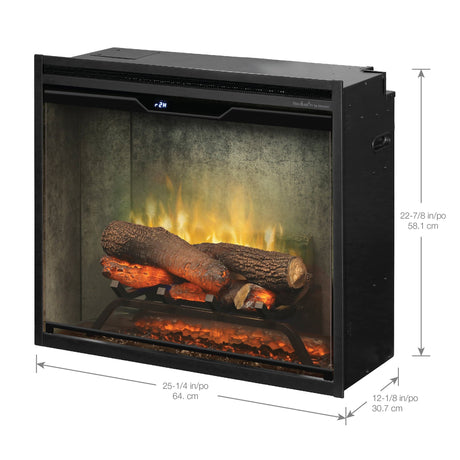
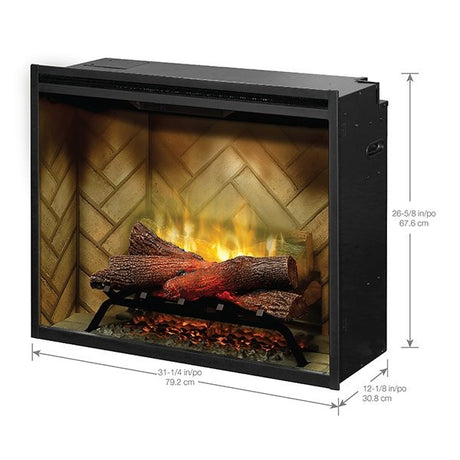
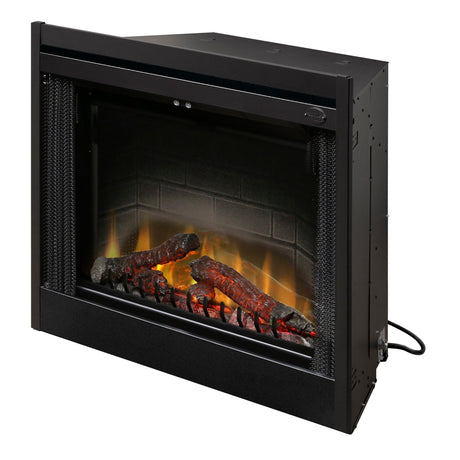
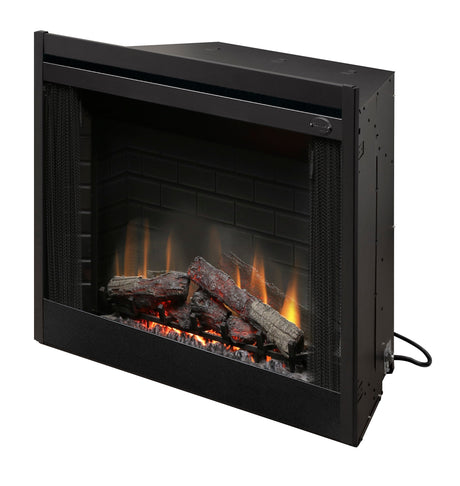
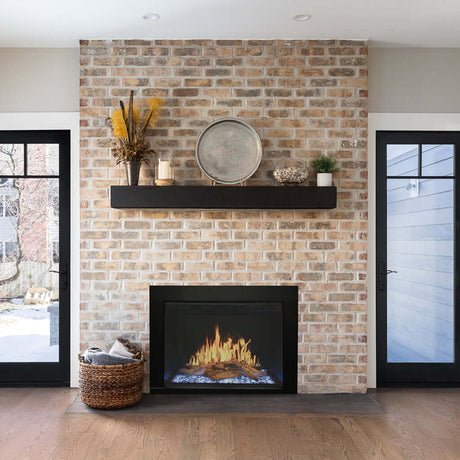
Every model in this collection installs at zero clearance — sides, rear, and bottom require no insulation gap — making them straightforward to frame into a new wall, media cabinet, or custom surround. For buyers replacing an existing gas or wood firebox, the BF Series and SimpliFire Built-In are specifically engineered to retrofit into standard factory-built fireplace openings; see the convert fireplace to electric collection for sizing guidance on vintage electric fireplace insert replacements. As a traditional electric fireplace insert, every unit in this collection accepts standard mantel surrounds — buyers looking for a vintage electric fireplace with mantel can pair these fireboxes with wood, MDF, or stone surrounds without custom modification. Minimum framing depths start at 8-3/4" (SimpliFire Inception) and reach 12" on the larger BF Series configurations; see the BF Series size guide and Revillusion® size guide for exact rough-opening dimensions.
Frequently Asked Questions
What is the difference between traditional and electric fireplaces?
A traditional gas or wood fireplace burns fuel and produces combustion byproducts that require a chimney or flue to vent safely. An electric fireplace produces no combustion — the flame is generated by LED lighting and the heat by an electric element, meaning no gas line, no flue, no emissions, and no ash. The practical trade-off is that electric fireplaces are supplemental heaters rated for a single room rather than a whole-home heating system, and the flame, however well-engineered, is simulated rather than a live fire.
What is the most realistic looking electric fireplace?
For the traditional format, Dimplex Revillusion® and Modern Flames HelioVision™ are consistently cited at the top. The Revillusion® uses handcrafted Realogs® with internal LED illumination and a reflective panel that creates genuine depth at close viewing distances. HelioVision™ produces a layered, three-dimensional flame through multi-panel LED technology with 18 style and colour presets. Both are in this collection. For a broader comparison across all flame technologies and formats, see the most realistic electric fireplaces collection.
What is the downside of an electric fireplace?
Electric fireplaces have two genuine limitations. First, they are supplemental heaters — the most powerful models here output up to 10,000 BTU at 240V, which heats a single room effectively but is not a whole-home solution. Second, the flame is simulated. The best technologies in this collection are well-regarded for realism, but buyers expecting live-fire behaviour should set expectations accordingly. Running costs are predictable — most 120V models draw 1,400–1,500W at full heat — but 240V configurations will have a more noticeable effect on electricity bills.
Do electric fireplaces waste a lot of electricity?
Electric fireplaces convert close to 100% of the electricity they consume into room heat — there is no flue loss. A typical 120V model running at full heat (1,400–1,500W) costs roughly $0.17–$0.22 per hour at average US electricity rates. Flame-only mode draws 40–100W, comparable to a few light bulbs. On a per-BTU basis, electricity is generally more expensive than natural gas, but because there is no heat loss up a chimney, electric fireplaces are more efficient at delivering the heat they produce into the room.
What kind of fireplace is best for asthma?
Electric fireplaces are the recommended option for people with asthma or airway sensitivities. They produce no combustion, no smoke, no particulate matter, and no nitrogen dioxide — the pollutants that wood and gas fireplaces emit and that are documented asthma triggers. There are no fumes, no residue, and no byproducts of any kind released into the room. Gas fireplaces produce far less particulate than wood, but still require proper venting to keep indoor air safe. Electric fireplaces produce nothing that enters the air.
Browse related collections: Electric Fireplaces · Dimplex Electric Fireplaces · Modern Flames Electric Fireplaces · Revillusion® Fireplaces · HelioVision™ Fireplaces · Built-In Electric Fireplaces · Convert Fireplace to Electric · Most Realistic Electric Fireplaces