How catalytic combustion works
A catalytic wood stove routes combustion gases through a ceramic catalyst combustor mounted in a cast iron housing inside the upper firebox. When the catalyst reaches 700 to 900 degrees Fahrenheit (within 15 to 20 minutes of startup at medium-to-high burn), it chemically ignites particulates that would otherwise pass through the chimney as smoke and creosote. Once active, the catalyst typically operates above 1,000 degrees Fahrenheit. A bypass damper routes gases around the catalyst during startup and reloading, then closes once light-off is achieved.
Why pick catalytic
Catalytic stoves deliver the lowest emissions per ton of wood burned (the Buck Model 91 is rated at 1.2 g/hr emissions), the highest sustained efficiency at low burn rates, the longest overnight burn times, and the least creosote accumulation in the chimney. Catalysts excel at extracting heat from slow, smoldering fires that would lose most of their energy up a non-catalytic chimney.
Catalyst lifespan and replacement
Catalysts have a finite life, typically 10,000 to 12,000 hours of operation. The Buck Model 91 manual specifies visual inspection of the combustor at least three times per heating season. Signs of catalyst end-of-life include loss of heating efficiency, increased smoke, and inability to maintain temperatures above 1,000 degrees Fahrenheit. The Model 91 catalyst is supplied by Applied Ceramics of Atlanta, Georgia; replacement combustors are ordered directly from Applied Ceramics.
Models in this collection
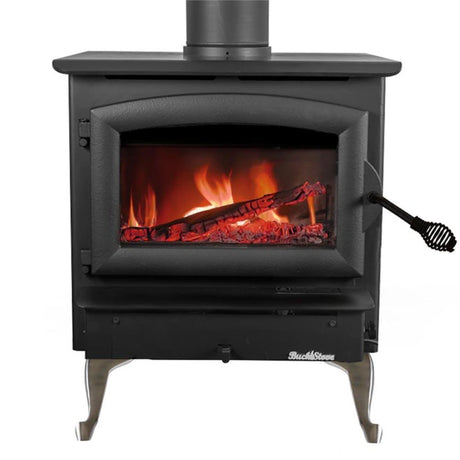
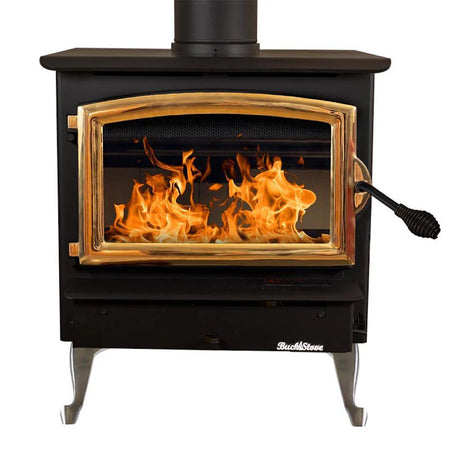
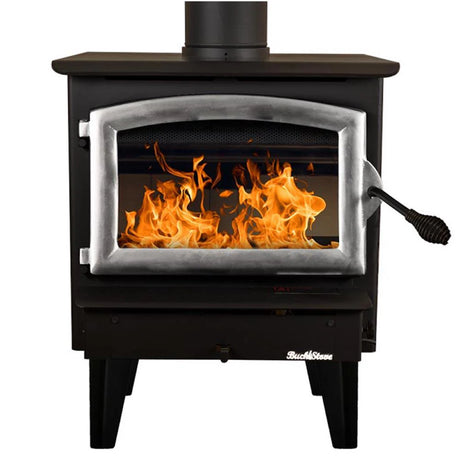
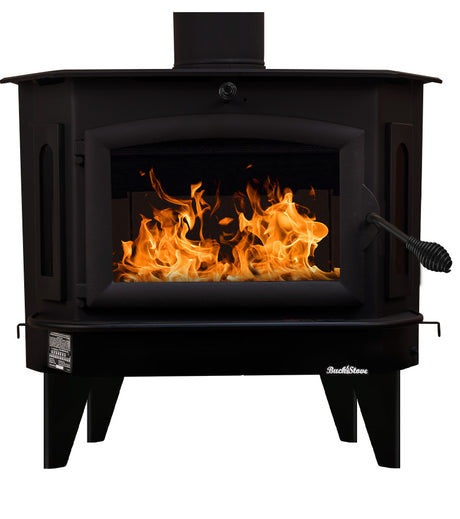
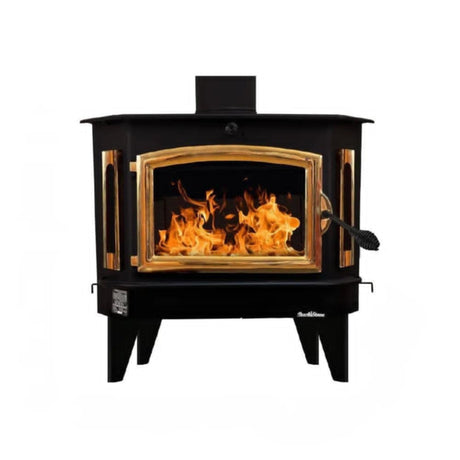
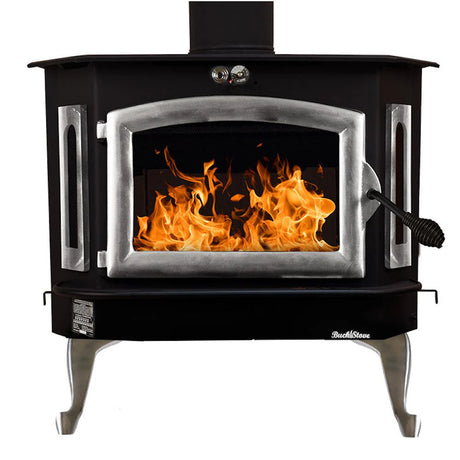
Buck Stove Model 91 Catalytic is the largest Buck Stove wood-burning product. The 4.4 cubic foot firebox accepts logs up to 22 inches in either front-to-back or side-to-side orientation. Tested EPA output 10,400 to 62,745 BTU per hour at 79.5 percent efficiency (HHV). A factory-installed variable-speed blower with automatic thermostat is included as standard. Installs as either a masonry fireplace insert or freestanding stove.
FAQ
Are catalytic wood stoves worth it? For large homes, long overnight burns, and households that prioritize lowest emissions and lowest chimney maintenance, yes. The catalyst delivers measurable efficiency gains versus non-catalytic at low burn rates.
Is a catalytic wood stove better than a non-catalytic? Better at long sustained low burns and overall emissions; non-catalytic stoves light off faster and have no catalyst to replace. See the Buck Stove comparison guide for the full trade-off comparison.
How long do catalytic combustors last? Typically 10,000 to 12,000 hours of operation. Inspect three times per heating season; replace when efficiency drops or operating temperature falls below 1,000 degrees Fahrenheit.
Can you burn the catalyst without engaging the bypass damper? Following the manual's operating instructions is required by federal regulation for EPA-certified wood heaters. Operating in a manner inconsistent with the manual is prohibited.
Browse related collections: All Stoves · Wood Stove Inserts · Small Wood Stoves · Large Wood Stoves · Catalytic Wood Stoves · Non-Catalytic Wood Stoves · Mobile Home Approved.