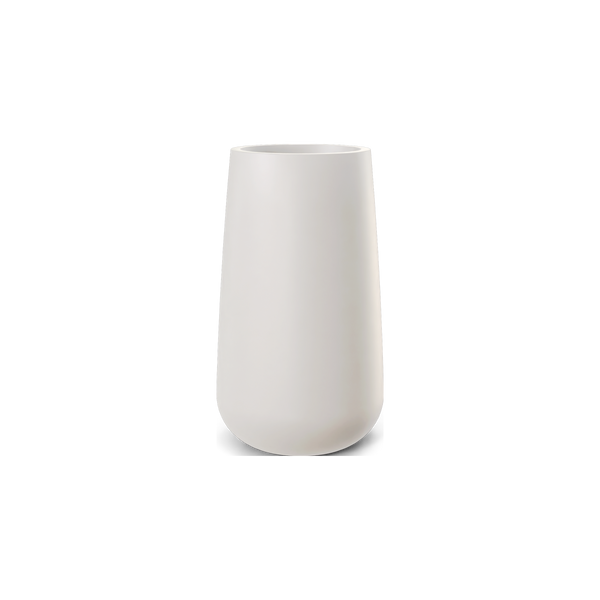
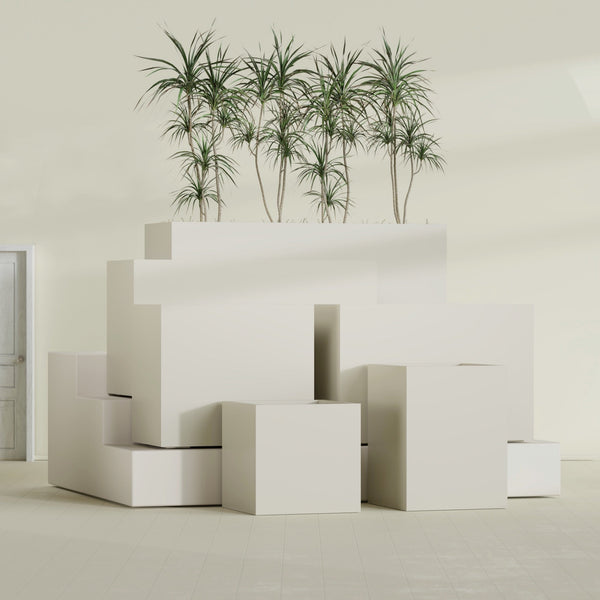
On a small planter the difference between concrete and fiberglass is a preference. On a large one it decides whether the planter can be there at all. A six-foot cast trough needs equipment to place and cannot be moved afterwards; the same shape in fiberglass arrives on a pallet and can be repositioned before it is filled. Jay Scotts say it in their own comparison of materials: fiberglass planters are much easier than concrete to move around.
That matters most on structures. A roof terrace, a balcony or a podium deck has a load allowance, and a large concrete planter can use it up before any soil goes in. Grey gives you the appearance that suits those settings, which are usually concrete, stone and glass to begin with, without spending the allowance on the container.
The finish is flat and has no sheen, which is what makes it work at scale: a large surface with a highlight on it reads as an object, while a matte one reads as part of the structure. Read the size table on each product page, because the largest sizes ship by freight truck and are delivered curbside.