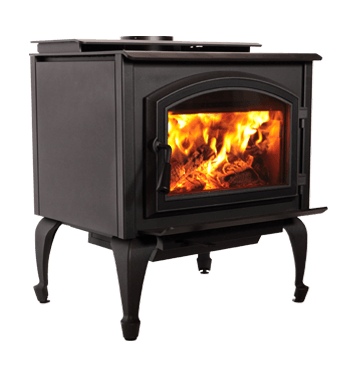
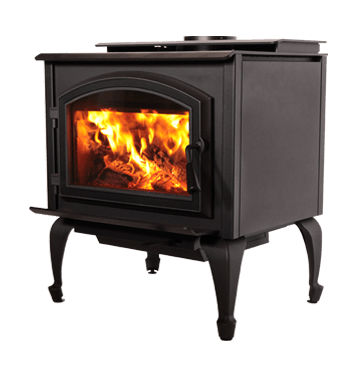
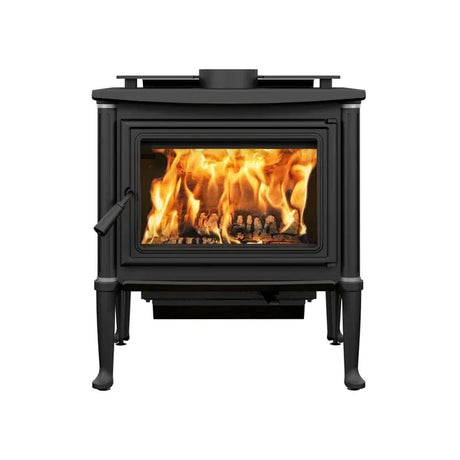
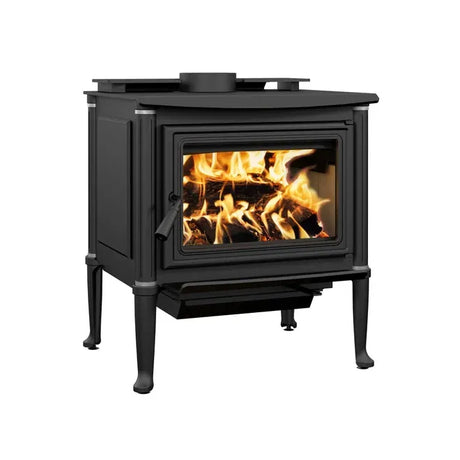
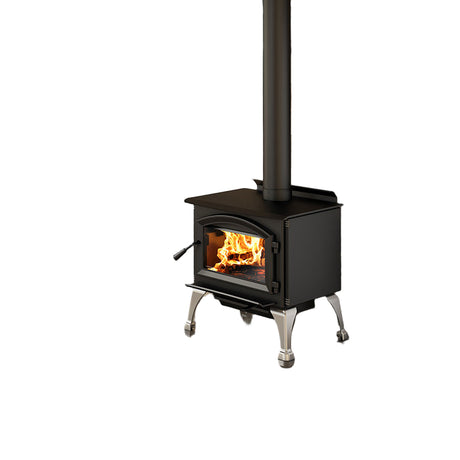
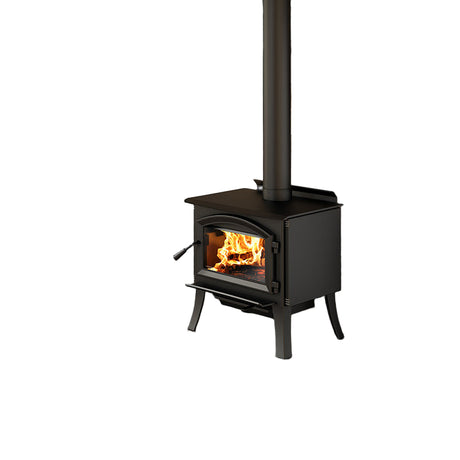
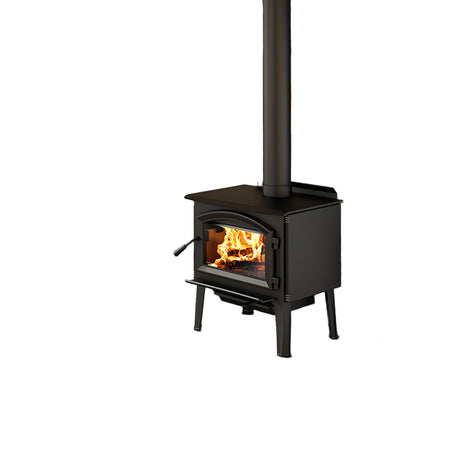
Why install a wood stove in the basement
Basement wood stoves take advantage of natural heat convection: hot air rises through the floor system, warming the main floor above without requiring ductwork or a blower system. The basement install also concentrates fuel handling, ash management, and chimney connections in a single utility zone, leaving the main living space clean.
Sizing for a basement installation
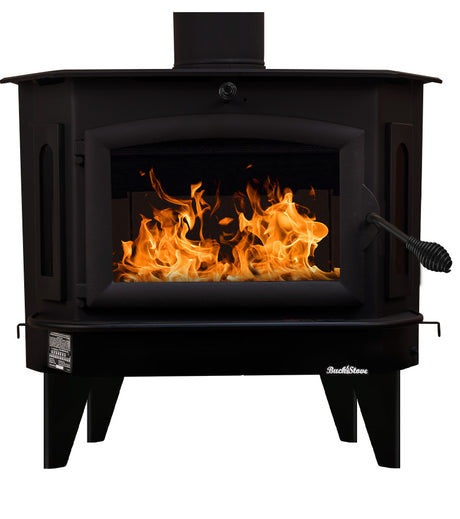
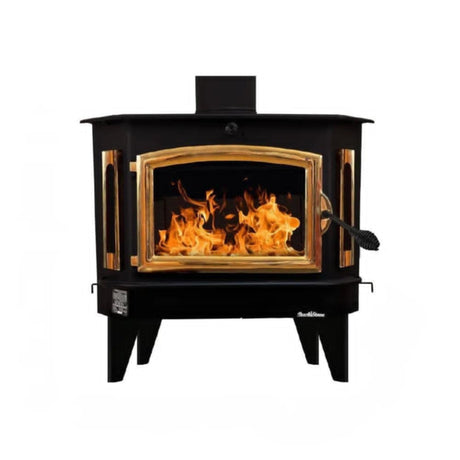
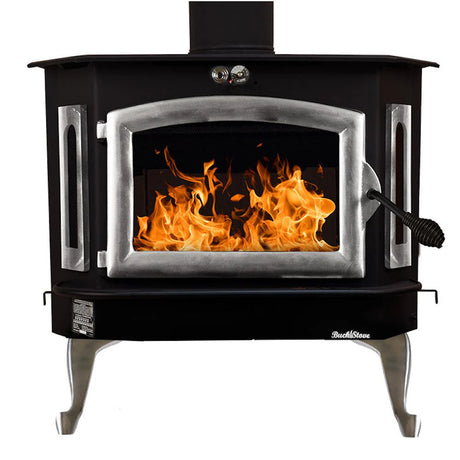
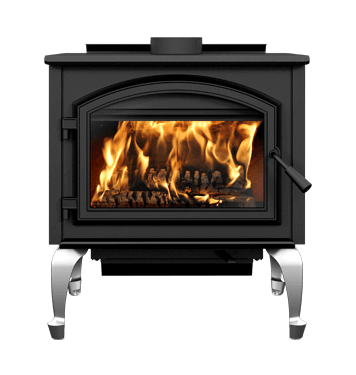
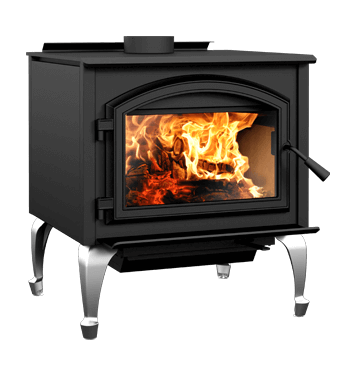
Size larger than you would for the basement alone. The stove needs to heat the basement plus push enough warm air upstairs to noticeably warm the main floor. For a 1,500 sq ft main floor over a 1,500 sq ft basement, a stove rated 2,500 to 3,200 sq ft (Empire Gateway 3500 or Buck Model 91) is typical. Open stair access and uninsulated floors above improve heat transfer.
Basement chimney and venting
Basement wood stoves vent through a stove pipe up through the floor system and main floor ceiling, then exit through the roof. Chimney height needs to be sufficient for adequate draft (typically 15+ feet from the stove). The chimney runs in a chase or through interior closets to keep it indoors and warm, which improves draft. Exterior masonry chimneys on basement installations often need a liner with insulation.
Mobile home approved options
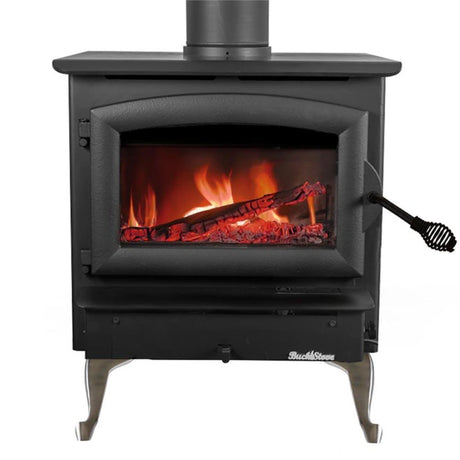
Several models in this collection are also mobile home approved with the required outside air kit: Enerzone Solution 2.3 and Buck Stove Model 21. Mobile home approval correlates with manufactured-home structural compatibility and is a useful proxy for basement and lower-level installations in homes with light-frame construction.
FAQ
Will a basement wood stove heat the upstairs? Often yes, with two conditions: the stove must be large enough to over-heat the basement so excess warmth rises, and the main floor needs an open stair or floor vent path for convection. Tightly closed basements with insulated ceilings limit heat transfer upstairs.
What size wood stove for a 1,500 sq ft basement? If the goal is to heat the basement plus push heat upstairs to the main floor, size for 2,500 to 3,200 sq ft total coverage. The Empire Gateway 3500 or Buck Stove Model 91 fit this use case.
Can a basement wood stove run on a metal chimney? Yes. UL 103 HT factory-built chimney is the standard solution for basement-to-roof venting, run through a chase in interior closets or alongside an existing ventilation chase.
Do basement wood stoves need an outside air kit? Recommended in tightly sealed homes where combustion air is limited. Some mobile home approved stoves (Solution 2.3, Buck 21) include or accept an outside air kit as part of the approval.
Browse related collections: All Stoves · Wood Stove Inserts · Small Wood Stoves · Large Wood Stoves · Catalytic Wood Stoves · Non-Catalytic Wood Stoves · Mobile Home Approved.